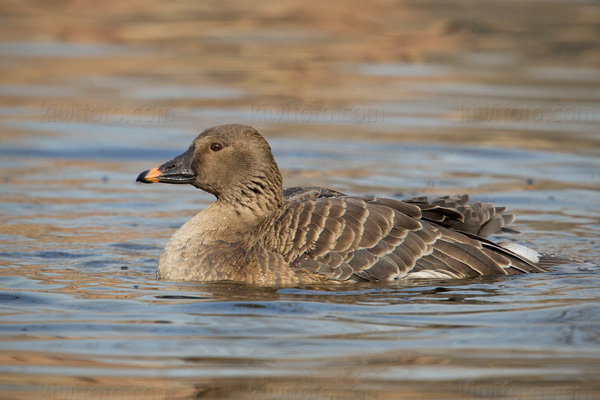
|
Nov, 2010 - 6 e-mail(s)... Feb, 2014 - 2 e-mail(s)... Oct, 2021 - 2 e-mail(s)... Mar, 2023 - 2 e-mail(s)... Aug, 2012 - 1 e-mail(s)... |
Jan, 2013 - 1 e-mail(s)... Oct, 2013 - 1 e-mail(s)... Feb, 2015 - 1 e-mail(s)... Jun, 2012 - 1 e-mail(s)... |
Please note that there may be no birder access to the Lancaster sewage ponds tomorrow, March 10, if it is raining. There will also be no birder access on the weekends.

If you want to take your chances, the goose may still be visible from Hwy 14.

Tom Benson

Redlands, CA


       toggle quoted message

Show quoted text |
Don't believe the Tundra Bean-Goose ever made it to the CALBIRDS list... Please see original sighting post by Jon Feenstra on LACOBIRDS for more info: https://groups.io/g/LACoBirds/topic/bean_goose_piute_3_6_23/97430669 It's still being seen as of 1pm this afternoon. -- Christopher Taylor Marina del Rey, CA https://kiwifoto.com ----- Forwarded message from American Birding Association ----- Date: Wed, 8 Mar 2023 15:08:47 +0000 (UTC) From: John Luther Subject: Bean Goose Bean Goose continues today Mar 8. When I arrived at 7:16 am I saw it from highway 14 where Chris saw it yesterday. At 7:28 it and 2 Canada geese flew south a short distance and joined 9 other Canada geese between office and 14. Still there at 7:28. John Luther Oakland |
Hi all, I am very pleased to let you know that I just refound the TUNDRA BEAN-GOOSE that was technically last seen on Monday, 18 October. The bird is now present in a harvested corn field with mostly Canada Geese here in the McKinleyville Bottoms. Views are distant but the flock is present mostly here:(40.9305284, -124.1243077). Best way to view the flock is from the uphill portion of Fischer Rd.
Good luck!
Rob Fowler Mckinleyville, CA

--
Rob Fowler
McKinleyville, CA
www.fowleropebirding.com |
Hi all, Just FYI that the Humboldt County Tundra Bean-Goose that Keith Slauson first found last Thursday evening, 14 Oct, has not been seen since Monday the 18th. People are out still looking today but it so far has not been refound.
Next time a major rarity shows up here we'll do a better job of getting at least an initial report up on the listservs since it appears at least a few birders did not hear about the goose until it was too late.
Rob Fowler Mckinleyville, CA --
Rob Fowler
McKinleyville, CA
www.fowleropebirding.com |
Thanks to the CBRC for all their good work. I was a little disturbed to see Yellow-green Vireo removed from the review list, considering the findings of this major multilocus vireo phylogeny: http://cjbattey.com/papers/slager2014MPE.pdf Basically, East Mexican Yellow-greens are poorly differentiated from North American Red-eyeds, while west slope/southern birds are a different beast entirely. Based on current knowledge, if the AOU acts on this, we will not know if we are seeing things that are basically Red-eyed Vireos with yellow-green plumage or the genetically distinct Yellow-greens from the west slope and south. Thanks to Alvaro Jaramillo for bringing this paper to my attention a few months back. Tristan McKee Arcata, CA On Mon, Feb 9, 2015 at 2:54 PM, Kimball Garrett kgarrett@... [CALBIRDS] <[email protected]> wrote: The California Bird Records Committee held its annual meeting at the Western Foundation of Vertebrate Zoology in Camarillo on 23-24 January. The following items resulting from that meeting will be of interest to California birders: Changes to the STATE LIST: Arctic Warbler (Phylloscopus borealis) is removed and replaced with Arctic/Kamchatka Leaf Warbler (Phylloscopus borealis/examinandus); at present it is uncertain which of these taxa has occurred in California. The species pair Arctic/Kamchatka Leaf Warbler is also added to the review list. Tundra Bean-Goose (Anser serrirostris) is added to the state list (and review list) following the acceptance of the bird at the Salton Sea, Imperial Co. 19 Oct 2013 (CBRC record #2013-181); the species pair Taiga/Tundra Bean-Goose (Anser fabalis/serrirostris) is removed from the state list. Changes to the REVIEW LIST: Taiga/Tundra Bean-Goose is moved from the main Review List to the supplemental list of reviewed “species groups and hybrid taxa” at the end of the Review List Frigatebird sp. is removed from the “species groups and hybrid taxa” supplemental review list and replaced with Magnificent/Great/Lesser Frigatebird (Fregata magnificens/minor/ariel) Blue-footed Booby and Yellow-green Vireo are removed from the Review List COMMITTEE MEMBERSHIP: Voting members Jon Dunn, Peter Pyle and Steve Rottenborn rotated off the Committee Lauren Harter, Kristie Nelson, and Scott Terrill were elected to the Committee as voting members Joe Morlan was re-elected as CBRC Chair Dan Singer was re-elected as CBRC Vice-Chair Finally, and most importantly, Guy McCaskie retired as Secretary after serving in that role since 2001. Tom Benson was elected to replace Guy as Secretary; all documentation of CBRC review species should now go to Tom Benson at secretary@... These changes to the State List, Review List, and Committee membership have been made on the CBRC web site by webmaster Joe Morlan; see: http://californiabirds.org/ In particular, note the tribute to outgoing secretary Guy McCaskie at: http://californiabirds.org/GuyMcCaskie015.html Kimball L. Garrett [acting as CBRC spokesperson] Natural History Museum of Los Angeles County 900 Exposition Blvd. Los Angeles, CA 90007 USA (213) 763-3368 kgarrett@... |
If I'm not mistaken, both these records (and potentially the Tundra Bean-Goose) are first records for the lower 48 as well! William Rockey --- In [email protected], Kimball Garrett <kgarrett@...> wrote: > > Birders, > > > > The California Bird Records Committee has accepted the record (#2013-192) of a Marsh Sandpiper, Tringa stagnatilis, near Mecca, Riverside Co. 26 Oct 2013, and the record (#2013-195) of a Common Swift, Apus apus, near Desert Center, Riverside Co. 30 Oct 2013. These two additions bring the California checklist to 657 species (646 naturally-occurring plus 11 introduced). CBRC Chair and webmaster Joseph Morlan has updated the web site to reflect these changes: > > http://www.californiabirds.org/list.html > Note that Marsh Sandpiper is placed on the checklist immediately after Lesser Yellowlegs; Common Swift is placed immediately after Vaux's Swift. Both are added to the CBRC review list as well. > > > > Another potential new California record is currently in circulation (record #2013-181 of a Tundra Bean-Goose, Anser serrirostris, at Unit 1 of the Salton Sea NWR, Imperial Co. 19 Oct 2013); if this record is accepted as Tundra Bean-Goose, the current checklist taxon "Taiga/Tundra Bean-Goose, Anser fabalis/serrirostris, will be removed, so there will be no net gain in the species total. > > Kimball L. Garrett > "CBRC Press Secretary" > Ornithology Collections Manager > Natural History Museum of Los Angeles County > 900 Exposition Blvd. > Los Angeles, CA 90007 USA > kgarrett@... > http://www.nhm.org/site/research-collections/ornithology > |
Birders, The California Bird Records Committee has accepted the record (#2013-192) of a Marsh Sandpiper, Tringa stagnatilis, near Mecca, Riverside Co. 26 Oct 2013, and the record (#2013-195) of a Common Swift, Apus apus, near Desert Center, Riverside Co. 30 Oct 2013. These two additions bring the California checklist to 657 species (646 naturally-occurring plus 11 introduced). CBRC Chair and webmaster Joseph Morlan has updated the web site to reflect these changes: http://www.californiabirds.org/list.html Note that Marsh Sandpiper is placed on the checklist immediately after Lesser Yellowlegs; Common Swift is placed immediately after Vaux’s Swift. Both are added to the CBRC review list as well. Another potential new California record is currently in circulation (record #2013-181 of a Tundra Bean-Goose, Anser serrirostris, at Unit 1 of the Salton Sea NWR, Imperial Co. 19 Oct 2013); if this record is accepted as Tundra Bean-Goose, the current checklist taxon “Taiga/Tundra Bean-Goose, Anser fabalis/serrirostris, will be removed, so there will be no net gain in the species total. Kimball L. Garrett “CBRC Press Secretary” Ornithology Collections Manager Natural History Museum of Los Angeles County 900 Exposition Blvd. Los Angeles, CA 90007 USA kgarrett@... http://www.nhm.org/site/research-collections/ornithology |
Saturday afternoon, 19 Oct, Garrett MacDonald and Tyler Pockette photographed what appears to be a TUNDRA BEAN-GOOSE at Unit 1, SESS, on a pond to the NE of the observation tower and platform. They will likely post additional details and the photos soon, but I thought it best to get the news out before it got any later in the evening... Yes, this bird looks more like a Tundra Bean than the infamous bird at the same location (!) three years ago. This bird shows a rounder head and a stubbier bill--at least that's how it looks in the two photos. Paul Lehman, San Diego -------------------------------------------------------------------- mail2web.com Enhanced email for the mobile individual based on Microsoft® Exchange - http://link.mail2web.com/Personal/EnhancedEmail |
Birders, The California Bird Records Committee held its annual meeting at the Western Foundation of Vertebrate Zoology in Camarillo on 18-19 January 2013. Below is a brief summary of actions relating to committee membership, the state list, and the review list. The CBRC web site < www.californiabirds.orghttp://www.californiabirds.org> > has been updated by webmaster Joe Morlan to reflect these actions. Joseph Morlan, Adam Searcy and Dan Singer were elected to three-year terms on the Committee. We welcome back Joe, who will serve as CBRC Chair, and Dan, who will be Vice-Chair; Adam will be serving his first term on the Committee. Rotating off the committee are Dave Compton, Kimball Garrett and Oscar Johnson. After discussion, the Committee let stand its final decisions to add Taiga/Tundra Bean-Goose (from Imperial Co.) and Common Crane (Del Norte Co.) to the California state list. Taiga/Tundra Bean-Goose (Anser fabalis/serrirostris) is placed on the California list between Fulvous Whistling-Duck and Greater White-fronted Goose, with a "P" symbol. Common Crane (Grus grus) is placed on the checklist after Sandhill Crane, also with a "P" symbol. Both the crane and the goose get an asterisk, indicating that they have been added to the review list. Acceptance of these two taxa brings the California state list to 651 species (including 10 established introduced species). An additional photographic record of Common Crane is under review. The following species will be removed from the review list: Yellow-crowned Night-Heron (regular breeding population in San Diego Co., possibly Ventura Co.) Harris's Hawk (regular breeding in s. San Diego Co.) Lesser Black-backed Gull (has averaged >7 accepted records of new individuals per year over the past 10 years) Parakeet Auklet (large numbers in recent years well off n. CA in winter, early spring) As always, records of these four species (and all rarities) should still be documented and sent to appropriate North American Birds sub-regional editors. Among the many additional topics discussed was the increasing and unfortunate trend toward "photo-only" submissions of records. We urge observers to provide written context with all photo submissions, including circumstances of the sighting, description of behaviors and vocalizations (and anything else not evident in photographs), and other pertinent details. The CBRC thanks its outgoing members for their service, Linnea Hall and Adam Searcy of the WFVZ for hosting our meeting, and all of the observers who have submitted documentation of records to the CBRC over the past year. Kimball L. Garrett Ornithology Collections Manager Natural History Museum of Los Angeles County 900 Exposition Blvd. Los Angeles, CA 90007 USA 213-763-3368 kgarrett@... http://www.nhm.org/site/research-collections/ornithology |
Birders, The California Bird Records Committee has accepted the recent well-documented record of an adult Northern Gannet (Morus bassanus) at Southeast Farallon Island, San Francisco Co., 25 April to at least 25 June 2012. Along with the gain of one species with the recent split of Xantus's Murrelet into Scripps's Murrelet (Synthliboramphus scrippsi) and Guadalupe Murrelet (S. hypoleucus), this brings the California state list to 648 species. As noted in an earlier message on 25 June, the Committee has also voted to accept the Taiga/Tundra Bean-Goose from the Salton Sea; in addition, the Common Crane at Lake Earl, Del Norte Co. 5-8 May 2011 was accepted (but with two members questioning the natural origin of this bird). The acceptance of the latter and the implementation and acceptance of a mechanism to add non-species such as Taiga/Tundra Bean-Goose would bring the state list to 650 species (including one species-pair). Requests have been made by CBRC members to further discuss the goose situation and to discuss (and possibly re-review) the crane record at the January 2013 CBRC meeting, so their acceptance at this point should be considered provisional. Concerns about the goose center on the desirability of adding a species pair as an entity on the state list, and as noted above concerns about the crane center on the question of natural origin. Northern Gannet is inserted in the state list after Red-footed Booby, and is also placed on the review list. Provisionally, Taiga/Tundra Bean-Goose (Anser fabalis/serrirostris) would be placed on the list before Greater White-fronted Goose, and Common Crane (Grus grus) after Sandhill Crane, with both also added to the review list. Stay tuned about those species. Kimball Kimball L. Garrett Ornithology Collections Manager Natural History Museum of Los Angeles County 900 Exposition Blvd. Los Angeles, CA 90007 USA 213-763-3368 kgarrett@... http://www.nhm.org/site/research-collections/ornithology |
The California Bird Records Committee has accepted the record of a bean-goose present 9 November 2010 to 8 January 2011 at Unit 1 of the Salton Sea National Wildlife Refuge, Imperial County. The Committee endorsed the record as pertaining to "Taiga/Tundra Bean-Goose (Anser fabalis/serrirostris)" and that species-pair will be added to the California state bird list. Most Committee members felt that the bird was more likely a Taiga Bean-Goose, and three members voted to accept it as belonging to that species. Taiga/Tundra Bean-Goose is added to the list between Fulvous Whistling-Duck and Greater White-fronted Goose, and is also added to the review list. Research on variation and species-limits in this complex is ongoing, and it is possible that in the future the Unit 1 bird will be reassessed and accepted as one species of the other; it is also possible, of course, that the AOU committee decision to split these two species will eventually be reversed, in which case the bird would appear on the state list as Bean Goose (Anser fabalis). Potential first state records of Common Crane (Grus grus), Northern Gannet (Morus bassanus), and Gray Hawk (Buteo plagiatus) are currently under review. Kimball L. Garrett Ornithology Collections Manager Natural History Museum of Los Angeles County 900 Exposition Blvd. Los Angeles, CA 90007 USA 213-763-3368 kgarrett@... http://www.nhm.org/site/research-collections/ornithology |
Birders,

I am spectacularly unqualified to comment on the Taiga vs. Tundra Bean Goose
issue, but I can provide some morphological data provided by Ruokenen et al. in
their recent (2008) paper. The complete citation is: Ruokonen, M., K. Litvin,
and T. Aarvak. 2008. Taxonomy of the bean goose - pink-footed goose. Molecular
Phylogenetics and Evolution 48:554-562.

Note that the AOU (48th supplement, 2007) basically followed Sangster and Oreel
(Dutch Birding 18:310-316, 1996) in splitting the complex as follows:
Taiga Bean-Goose, Anser fabalis
Considered monotypic, but clinal variation through formerly recognized
subspecies:
middendorffii (eastern taiga)
johanseni (central taiga)
fabalis (western taiga)
Tundra Bean-Goose, Anser serrirostris
Considered monotypic, but clinal variation through formerly recognized
subspecies:
serrirostris (eastern tundra)
rossicus (western tundra)

The more recent molecular paper by Ruokonen et al. realigns the split to include
two lineages at the species level:
Anser middendorffii (eastern taiga)
Anser fabalis (including ssp. fabalis, rossicus and serrirostris, thus
including all tundra plus western taiga)

Sangster and Oreel (at least as summarized in the Ruokonen et al. paper) seem to
suggest johanseni (central taiga) is not valid, but instead represents
intergrades between middendorffii and fabalis (and that such intergradations is
rarer than had previously been thought.

So the taxonomy still seems unsettled, though the AOU treatment above is
"official" at this point. From a California context, the important point is
that middendorffii and serrirostris, the two subspecies "most likely" to show up
here, are considered separate species in either treatment.

The main point of this message is to quote the measurement table included in
Ruokonen et al. Three bill measurements were found to be useful (I have not
heard of other characters suggested, but the recent Birding World paper which I
have not seen should be consulted; AOU 2007 implies that there are some color
and vocal differences):

middendorffii
Bill length 69.7 (SD=4.98)
Bill height 34.1 (SD=2.80)
Nail length 17.5 (SD=1.46)
Grinning patch height 8.4 (SD=1.04)

serrirostris
Bill length 62.9 (SD=3.00)
Bill height 33.8 (SD=1.52)
Nail length 18.2 (SD=1.84)
Grinning patch height 7.7 (SD=1.12)

fabalis
Bill length 61.5 (SD=4.24)
Bill height 30.5 (SD=1.89)
Nail length 15.3 (SD=1.11)
Grinning patch height 5.8 (SD=1.18)

rossicus
Bill length 57.8 (SD=2.42)
Bill height 30.7 (SD=1.52)
Nail length 16.5 (SD=0.84)
Grinning patch height 7.29 (SD=1.01)

So unless there are other (plumage) characters that are useful, you are
basically looking for roughly a 5 mm difference in bill length, with
middendorffi having a longer but relatively less deep bill. There are even
smaller differences in bill height, nail length and grinning patch height. And
note that there is a little bit of overlap between the two relevant taxa in most
or all bill structure characters.

My head is spinning....

Kimball L. Garrett
Ornithology Collections Manager
Natural History Museum of Los Angeles County
900 Exposition Blvd.
Los Angeles, CA 90007 USA
213-763-3368
kgarrett@... |
The ID paper Paul refers to is:

Brown, D. 2010. Identification and taxonomy of bean geese. Birding World 23
(3):110-121.

Dan Singer
Pacifica

________________________________
From: "barbarac2003@..."
To: CALBIRDS
Sent: Wed, November 17, 2010 1:12:48 PM
Subject: [CALBIRDS] Fw: [inlandcountybirds] Taiga vs. Tundra Bean-Goose debate!

Sent from my Verizon Wireless BlackBerry |
Sent from my Verizon Wireless BlackBerry |
Bob, et al.- For what it's worth, the AOU has two species of Bean-Goose listed as such: Anserinae Anser fabalis - Taiga Bean-Goose Anser serrirostris - Tundra Bean-Goose Ref: http://www.aou.org/checklist/north/full.php#Anseriformes -- Christopher Taylor Marina del Rey, CA http://kiwifoto.com |
v1.35 - 11/22/22 - Finally rewrote code to handle new Groups.IO web structure
v1.30 - 01/05/16 - Revamped cloud logic, optimized database queries, linked to eBird rarities.
v1.23 - 12/08/11 - Added direct link to CBRC records.
v1.22 - 12/03/11 - Corrected GMT offsets on dates. Added last 5 posts at top.
v1.21 - 11/24/11 - Added direct link to range map for NA birds.
v1.2  - 11/23/11 - Greatly improved graphing technology - separates month vs. year by posts. Added species auto-complete functionality.
v1.14 - 11/22/11 - Added cloud bubble for common thread topics.
v1.13 - 11/22/11 - Added integrated photos where available.
v1.12 - 11/22/11 - Added multiple input boxes for additional refinement, negative search criteria (eg. -keyword).
v1.11 - 11/22/11 - Added banding code, species look-up. Also direct link to recent eBird observations.
 v1.1 - 11/22/11 - Added 'date' functionality. Shows top 'month/year' combinations for a query. Restrict results to that 'month/year'.
 v1.0 - 11/21/11 - Initial version coded. Currently archiving 'lacobirds' and 'calbirds'.